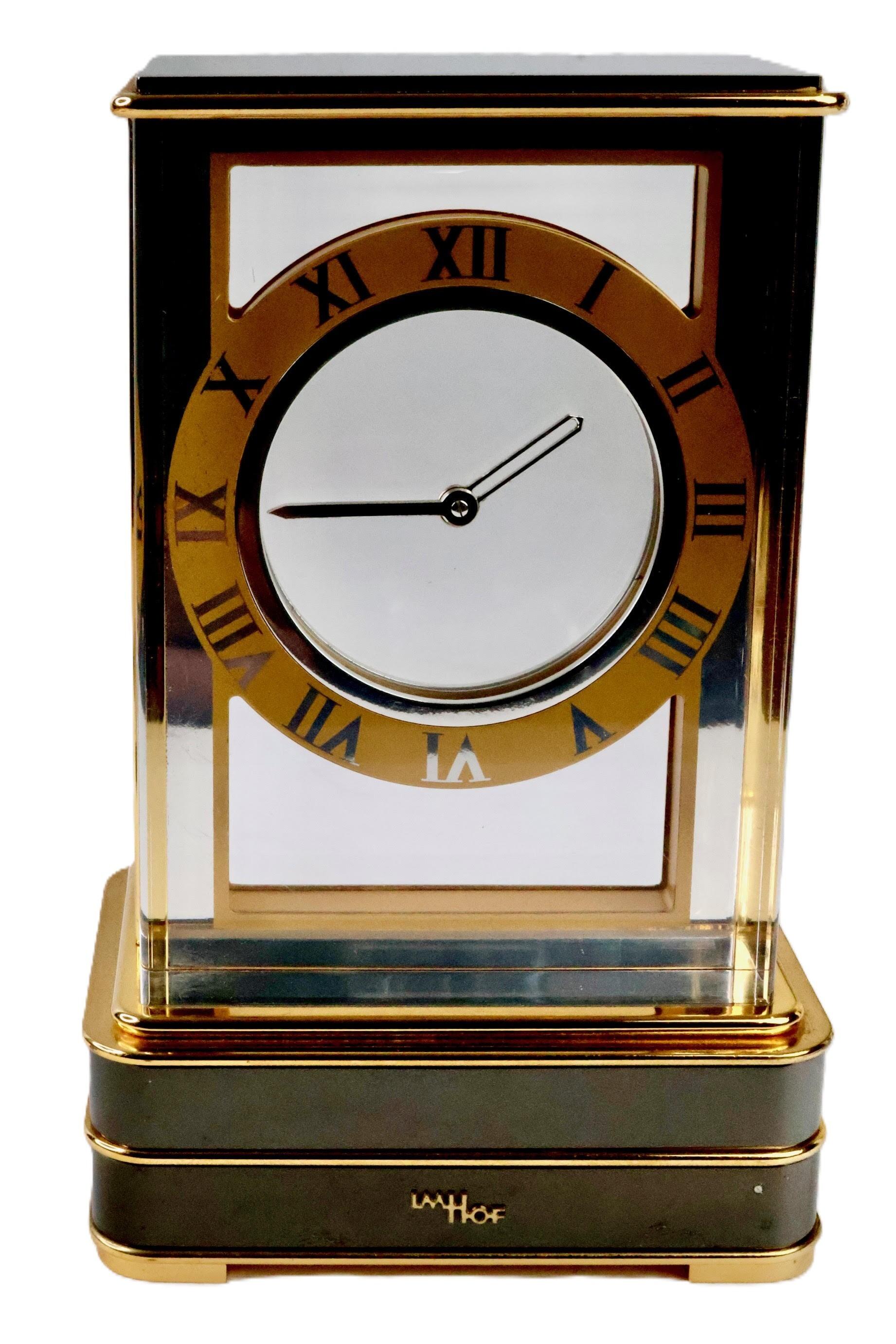
A French Brass Striking Carriage Clock Henri Jacot, Paris
£1,950.00
Delivery costs and discount codes are added at checkout
Prices are currently displayed in GBP (United Kingdom)
Select a new currency and country below
The Clock Clinic offers one of the most carefully curated selections of antique carriage clocks for sale in the UK. Every piece in our collection is assessed, serviced where necessary, and sold with full confidence in its authenticity and working condition. Whether you are a seasoned collector searching for a specific French maker, or buying your first carriage clock, you will find our team's knowledge of these movements and cases unmatched on the high street.
Carriage clocks were first produced in France in the early nineteenth century, emerging from the workshop traditions of Paris and later spreading to regional centres such as Saint-Nicolas-d'Aliermont. The genre reached its commercial and artistic peak between approximately 1860 and 1910, when the great French ateliers were producing movements of extraordinary precision and cases of remarkable decorative variety. It is this golden period that forms the heart of our stock.
France dominated the production of antique carriage clocks for the better part of a century, and the French carriage clock remains the definitive form of the genre. Parisian manufacturers exported their movements worldwide, selling in London through agents and retailers who often applied their own retailer signatures to the dials and cases. This practice is worth understanding when buying: a clock signed by a London retailer such as Dent or Garrard may well contain a French movement, and that movement's quality is what determines its longevity and value.
The most respected French carriage clock makers include Henri Jacot, Drocourt (whose cases are recognised by the initials DC with a padlock mark on the backplate), Bolviller, Le Roy et Fils, and Margaine. Movements by these houses command a premium at auction and among private collectors. Where we can authenticate maker attribution with confidence, we state it. Where we cannot, we describe the movement type and finish accurately, so you know exactly what you are acquiring.
One of the most important variables in any carriage clock purchase is the movement type. The mechanism determines both the acoustic character of the clock and its horological complexity, and it has a direct bearing on value. The main categories are as follows:
Each of the carriage clocks listed in our collection includes a movement type description. If you are unsure which type would suit your requirements, our team is happy to advise.
Case style is the second major variable in identifying and valuing a carriage clock. French makers developed a vocabulary of case forms that remain the standard reference points for collectors today:
Carriage clock values are determined by a combination of factors, and understanding them will help you both buy wisely and appreciate what you already own. The principal considerations are:
Antique carriage clocks are robust mechanisms that will run reliably for decades with minimal maintenance, provided a few basic principles are observed.
Our stock changes regularly as new pieces are sourced, restored, and sold. The selection above represents current availability and includes a range of movement types, case styles, and price points, from entry-level striking clocks to rare grande sonnerie examples by named makers. If you are looking for a specific type, period, or maker that you do not see listed, contact us directly. We often have pieces held in reserve or can advise on acquisition.
What our customers say
Good friendly staff. Mantle clock in for repair ( 89 years old).. 28/05. not worked correctly for 76 years. update, clock repaired. collected 29/09/21. still working.06/10. Worth it for the sentimental value!
I have used The Clock Clinic previously before moving away from the area. I required a replacement clock face for a family heirloom and initially sought help from a shop in Surrey which turned out to be extremely unhelpful, dismissive and rude. I called the Clock Clinic, and Elly could not have been more helpful! Elly spent time researching our problem, found another solution which was spot on for us, but did not result in a "sale" for them. Real "above and beyond" service, absolutely brilliant. Highly recommend.
What a brilliant team. I arrived expecting to wait several weeks to have the team sort out my wall chiming clock - but they managed to resolve the problem whilst I waited. Such a lovely team, and will definitely use them for all my clock and watch servicing.